





Every DonorsChoose project tells a story. That story is often one of hope: that students can get what they need to learn and grow to their full potential, and that teachers can meet those needs through the power of community.
But each project also tells a story of struggle as teachers shed light on the challenges and needs their young learners face every day, both in and out of the classroom. When coupling rising trends in teacher requests with external data, the research is clear: hunger is one of the biggest threats to learning in America's classrooms today, and it's on the rise.
Student Economic Need Is At A Historic High
90% of United States public schools have at least one teacher who has posted a project on DonorsChoose. One of America's most trusted education nonprofits, DonorsChoose enables hyperlocal, targeted giving – and hyperlocal, targeted data on student and teacher needs. Over the past decade, we've seen that more and more schools have become majority-Free or Reduced-Price Lunch, signaling a deeper structural need.
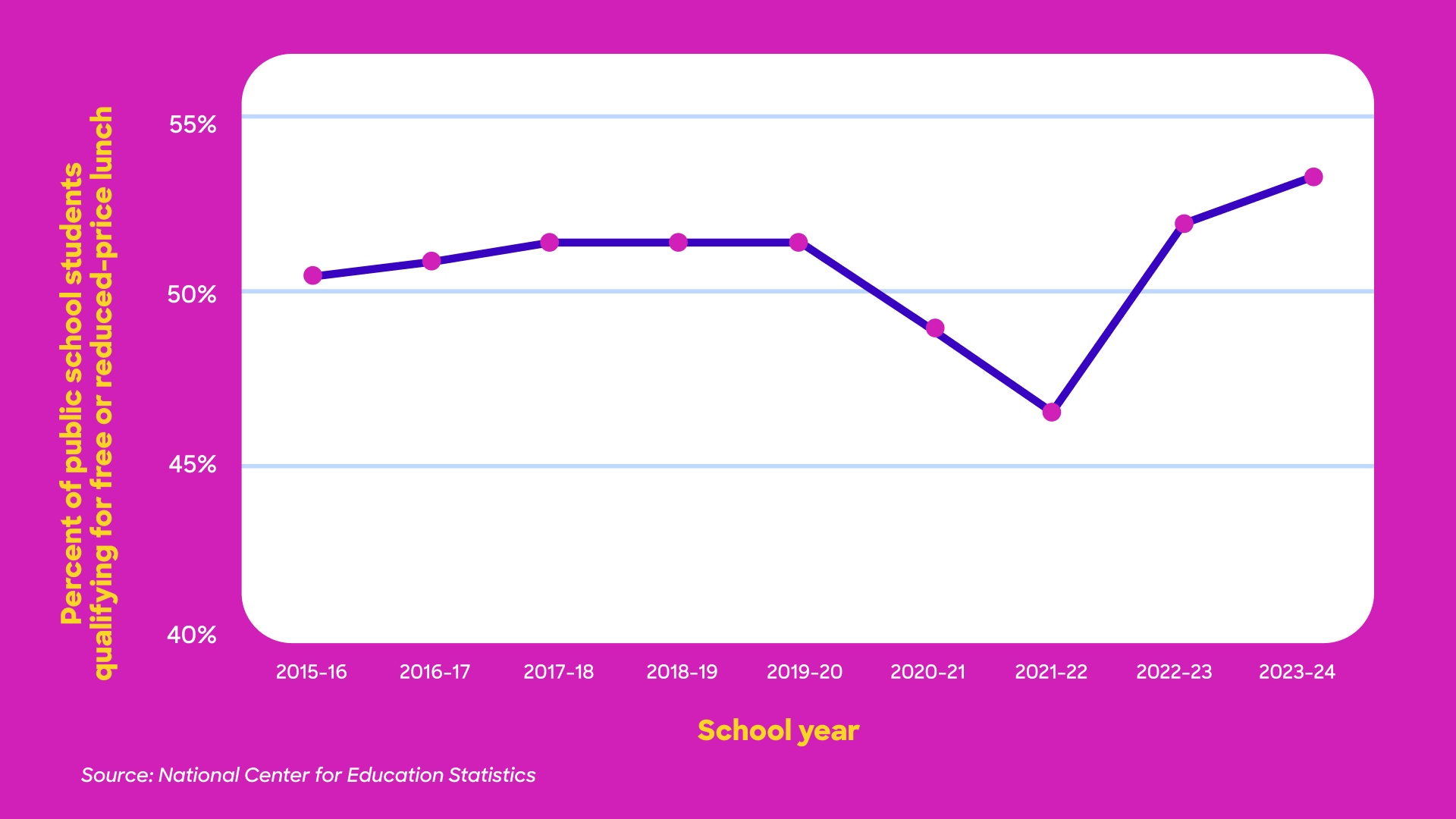
Research shows a unique dip in hunger needs at school in 2020-2022, when the pandemic caused a federal waiver to allow universal free lunch meals. When that waiver expired in 2022, schools returned to charging students for lunch, and hunger needs surged once more.
DonorsChoose insights come directly from data on what teachers across the country request, so we can break these patterns down by grade level, geographic region, and school economic level. We've found, for example, that high schools submit the highest share of hunger-related requests and urban schools experience the highest need. We've also discovered that while hunger requests follow a pattern throughout the school year — the highest points of need being during the summers, when school is not in session, and spiking again in January when students return from the winter break and teachers spot renewed need — the necessity for food relief persists year-round.
Those hunger needs mean a surge in hunger-related DonorsChoose requests, and the trend isn't slowing.
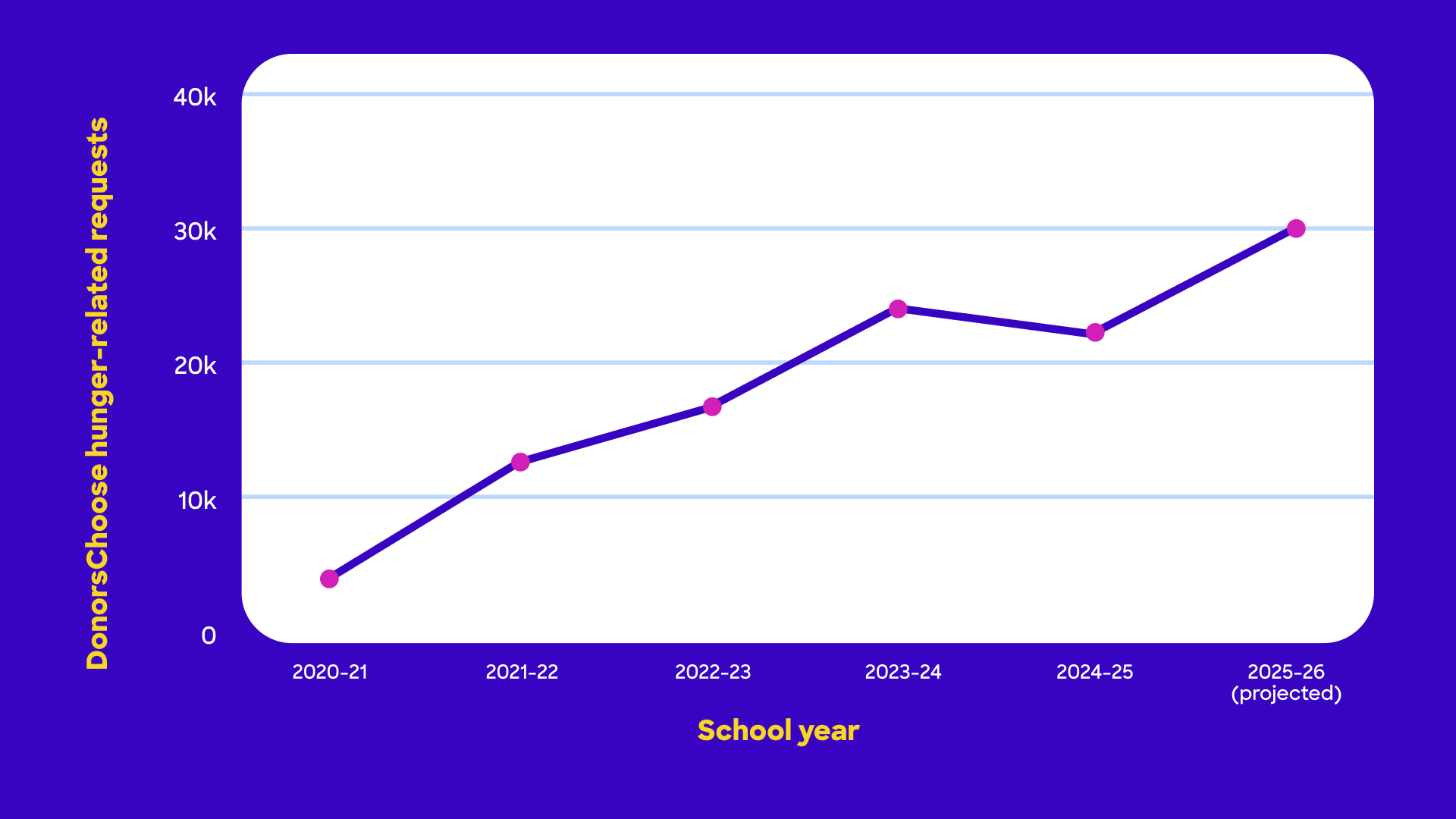
Teacher requests give us a realtime view of what hunger truly looks like, both in and beyond the classroom. Other than a brief dip in the 2024–25 school year that we attribute to temporary relief funding to cover student needs, we can see that hunger is on the rise, and teachers are the first responders.
Three Ways Teachers Confront Hunger
Students experiencing food insecurity face challenges their well-resourced peers don't have to encounter. They score lower on math exams, their attendance drops, and their mental health suffers. Teachers are front-line responders to youth hunger, and they inspire us to support them every day with the ways they innovate to address these crucial needs.
Coach Pitts told us in his own words what hunger looks like in his classroom.
Coach Pitts' story is one piece of the puzzle. When we zoom out, we find that teachers tend to address hunger in three main ways:
1. Feeding students directly
Whether it's money spent out-of-pocket or through generous donations on DonorsChoose, many teachers stock their classrooms with snacks to curb hunger, support their students' focus, and reinforce positive behavior. On Fridays, they send home weekend bags to help bridge resource gaps for when kids aren't at school. They also source food storage and infrastructure, such as microwaves, fridges, and food pantries, to help make food accessible anywhere at any time.
"Meals at school may be the only meals my students eat," says elementary school teacher Mrs. Wratchford of Carneys Point, NY. "I want to make sure that they have food options while in my classroom."
2. Serving the broader community
Classrooms and schools have begun serving as neighborhood food pantries that provide for students and their families, sometimes alongside community partners. Teachers also empower their students to organize pantries and food drives themselves as a way of building empathy, leadership skills, and community engagement.
"Many of our families face food insecurity," Ms. Yawson wrote in her DonorsChoose project description for her middle school classes in Springfield, MA. "Help me give my students meal bags filled with simple, shelf-stable foods they can easily prepare at home such as pasta, canned vegetables, beans, and canned chicken."
3. Connecting hunger to learning
Teachers make a point of linking nourishment to attention, learning, and positive behavior. Gardens, culinary programs, and sustainability projects reinforce nutrition lessons, teach young learners on food systems, and foster career skills for the future.
Mx. B, a high school teacher in Oakland, CA, demonstrated the power of connecting hunger to learning when they created a project titled "Micro-Kitchen Enablement for Engineering Students." In their project description, they wrote, "Having a functional kitchenette enables me to incorporate food-related lessons into my AP Computer Science curriculum such as the famous 'sunflower butter and jelly sandwich' lesson to introduce algorithms or College Board's 'Food Security and Hunger' module."
Turning DonorsChoose Data Into Meaningful Impact
When many teachers use DonorsChoose, the benefits compound. One project can grow into a wave of support and connection across a school, a community, a broader network of teachers, and classrooms that extends nationwide. We measure that transformative impact, and we're doing it by listening to and acting directly on teachers' voices and needs. Because when it comes to figuring out how to combat student hunger, teachers know what works.
Contact our partnerships team to learn how you can join foundations and corporate sponsors in turning DonorsChoose data into meaningful impact in your own communities.


.jpg)
.jpg)


.jpg)

