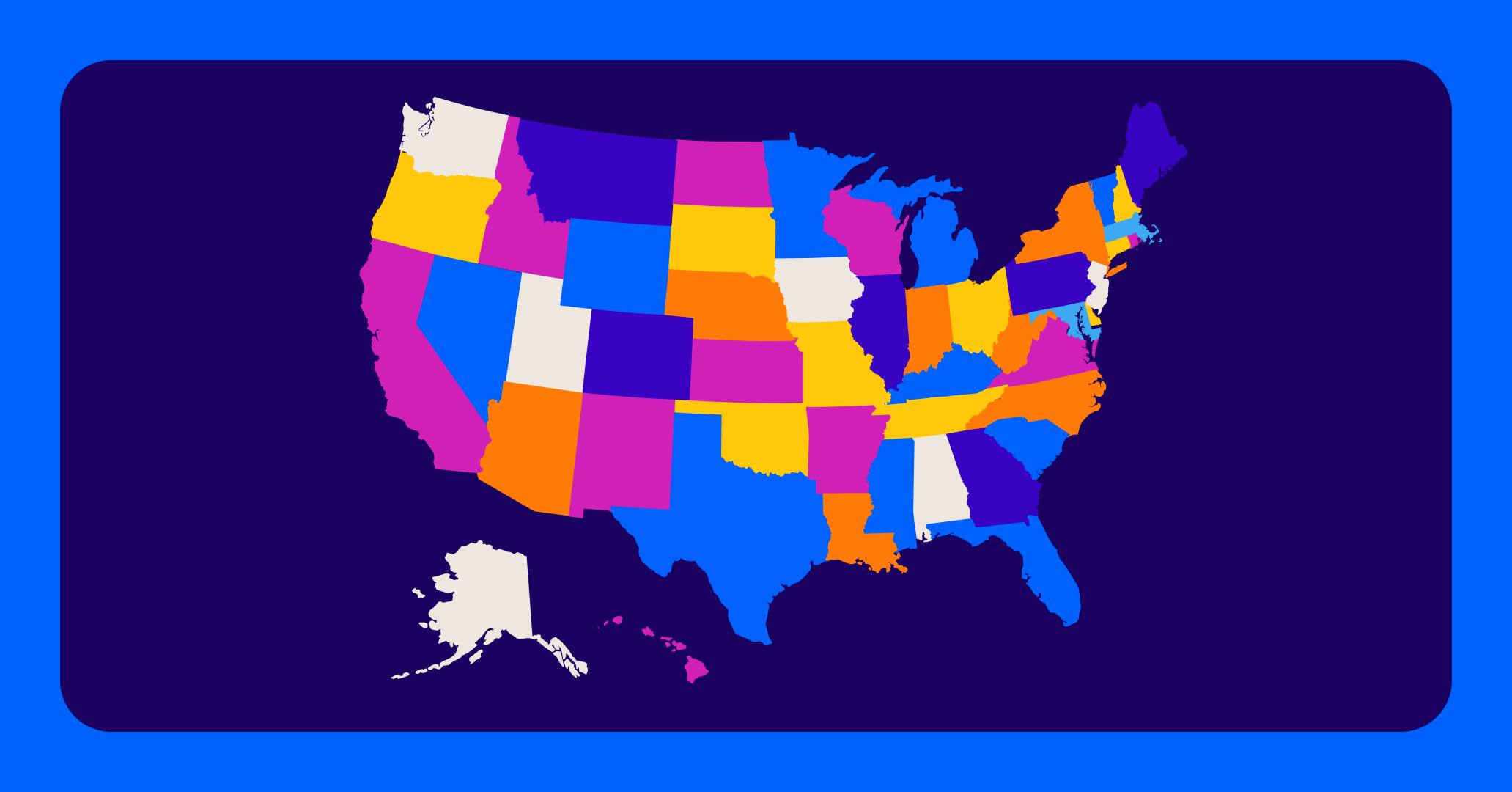


Teachers at 90% of public schools across the country have used DonorsChoose to request learning supplies for their students. Their requests give us a glimpse into what America's classrooms are experiencing on a daily basis.
This spring, around 2,500 public school teachers who use DonorsChoose answered our annual survey to understand what students and teachers need most. Their responses revealed five key insights that prove students don’t have everything they need right now to thrive in school, and that community investment is critical to students' success.
1. Teachers are working overtime while spending on their classrooms
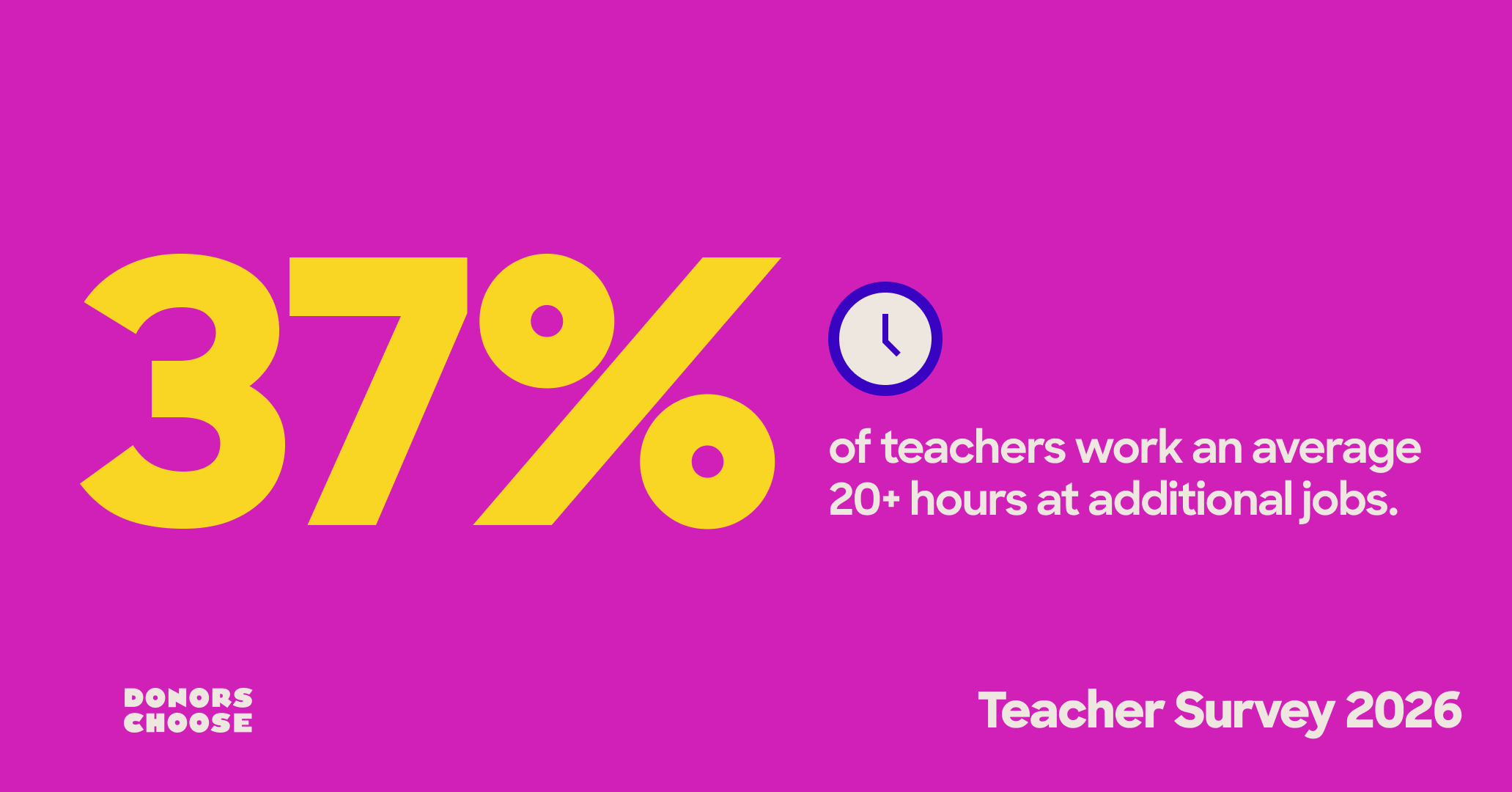
37% of teachers on DonorsChoose report working an additional job—everything from tutoring and retail work, to restaurants and the food service industry. These educators work an average of 23 hours at additional jobs to supplement their income.
And yet, teachers still reach into their pockets to get supplies for their students. On average, teachers report spending $600 of their own money on supplies for their students and classrooms, like pencils, paper, and notebooks. Nearly half note that without outside funding, their students would simply go without resources.
"If I'm being completely honest, before my first DonorsChoose project got funded, I was at a point where I was secretly tracking how much of my own paycheck was going toward my classroom. I was arguing with myself in the Target aisle over whether I could justify spending another $40 of my own money on supplies my kids desperately needed but our budget couldn't touch. It's a really demoralizing, quiet burden that so many teachers carry." – Elementary School Teacher, California
2. Classrooms are turning into food pantries
Nearly half of teachers report being increasingly concerned about student hunger. 40% of teachers provide students on a daily or weekly basis with essential life needs such as food, hygiene items, and clothing. With a rise in student hunger, it's no wonder that over 60% of teachers say they are concerned or very concerned about their young learners' mental health, too.
Providing funding for resources to create classroom food pantries and comfortable, stable learning environments means teachers can support their students without dipping into their own pockets.
“I provide my students with food daily. I wash their clothing when needed – maybe once per week. I provide an ear for when they feel they need to be heard.” – High School Teacher, New Jersey
“We ran a home delivery food shelf from our school when our children were too scared to go to school.” – Middle School Teacher, Minnesota
3. Students aren’t prepared for their futures
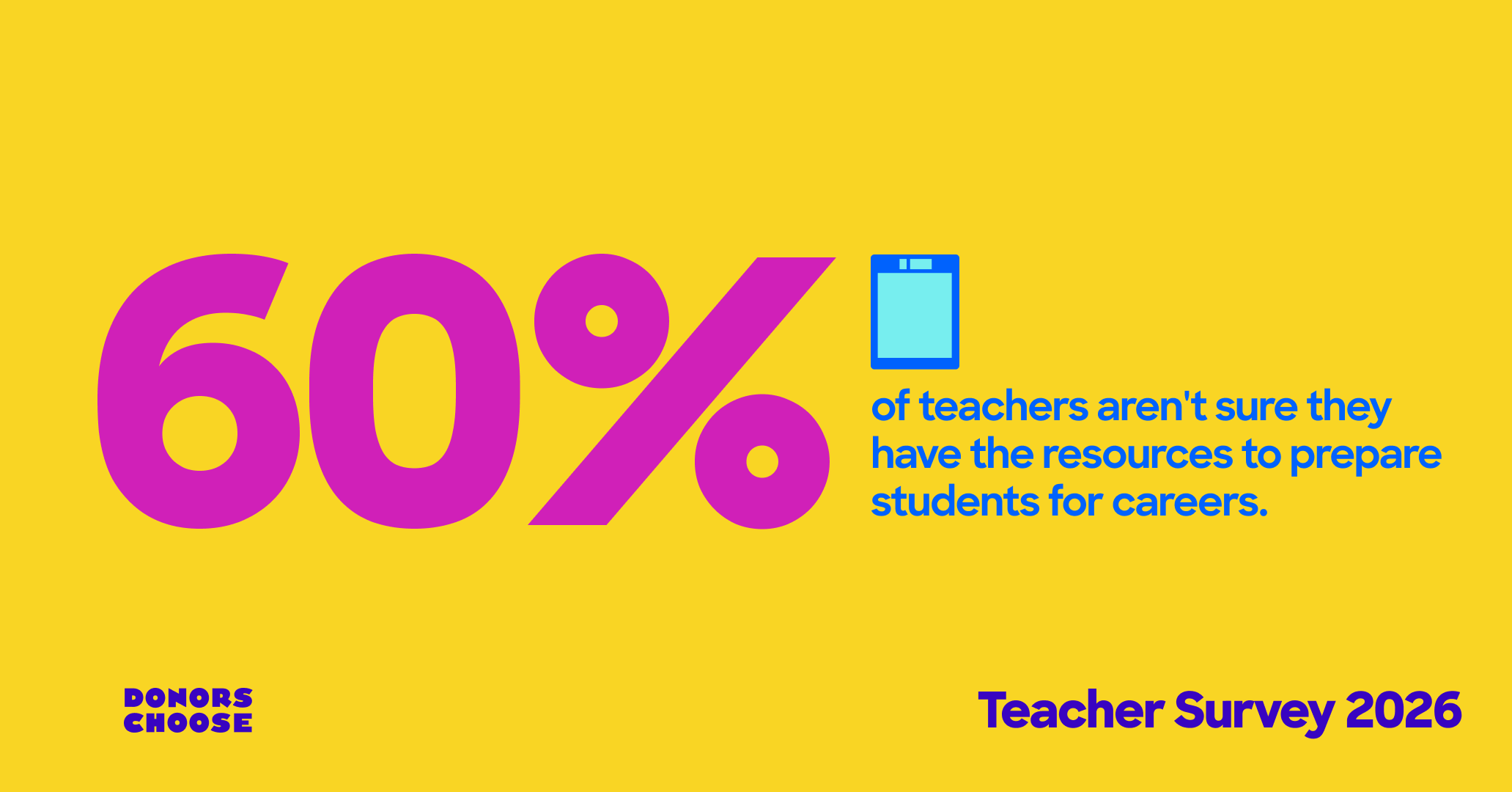
Over 60% of teachers say they don’t have or aren’t sure they have the right resources to prepare students for future careers.
When asked what's missing, they most often mentioned resources covering foundational academics like literacy and math, critical thinking and problem-solving, and other essential life skills like time management and receiving feedback. Access to DonorsChoose has helped many educators address these concerns.
“Through DonorsChoose, students have gained access to equipment and opportunities that make learning more engaging, interactive, and relevant to real-world careers. It has directly contributed to students being more engaged, more confident in their abilities, and more connected to STEM learning opportunities they may not have otherwise experienced.” – High School Teacher, Texas
“I'm providing a lot of structure to lessons and resources because many students do not have the critical thinking skills to figure out how to start an assignment. I'm trying to integrate more strategies to get students to rely less on me and more on themselves.” – High School Teacher, Connecticut
4. Regarding new technology, there’s a split in how teachers feel about it
In our survey, teachers showed just how much they're grappling with the impact of new technology. Over 50% report requesting more physical learning resources, emphasising a return to handwritten work and teaching students about responsible and ethical use of AI.
When it comes to AI, teachers are split, with about a third of educators believing AI will be important for their students' education. Despite the differing opinions on AI’s importance in learning, when asked to describe the biggest shift in their classroom experience this year, "technology and AI" was one of the most common responses.
Overall, the response from teachers was clear: lesson plans that emphasize critical thinking and meaningful learning application matter now more than ever.
“This year reinforced how valuable hands-on, project-based learning opportunities are for student engagement and growth. Students thrive when they are given opportunities to create, collaborate, solve problems, and apply learning in meaningful ways.” – High School Teacher, Texas
5. Rural schools are facing distinct challenges
A stark disparity was revealed through teachers’ responses: Teachers at underserved rural schools say they spend 30% more out-of-pocket than other teachers do on classroom supplies. They're also 14% more likely to have additional jobs.
Concern over students' access to getting needs met is higher for teachers at rural schools, too. Almost 70% of teachers at underserved rural schools are concerned or very concerned about their students' mental health, and over 70% say they teach students who frequently miss class.
“I have a majority of students living at or under the poverty line and DonorsChoose has made it so much easier to provide my students with the things that they need to learn.” – Elementary School Teacher, Alabama
“Everytime something new comes in, there is excitement – palpable excitement. To see the reactions when new percussion has entered the building? Pure joy. Students are always amazed (especially with incoming instruments) that someone would be willing to give our little rural school in the middle of nowhere something so nice.” – Elementary, Middle & High School Teacher, Wisconsin
What's next?
The DonorsChoose team is taking what we learned to drive more support to where student needs are greatest. Join us by giving to a classroom near you.
The science (and math) behind the survey
- This survey collected responses from 2,501 United States public school classroom teachers who used DonorsChoose in May 2026.
- The survey asked teachers about their experiences in the 2025–26 academic year.
- In addition to the data analysis based on answers from the full teacher group, the DonorsChoose team analyzed the data based on responses from teachers who work at historically underfunded schools and underserved rural schools.

.jpg)
.jpg)

.png)